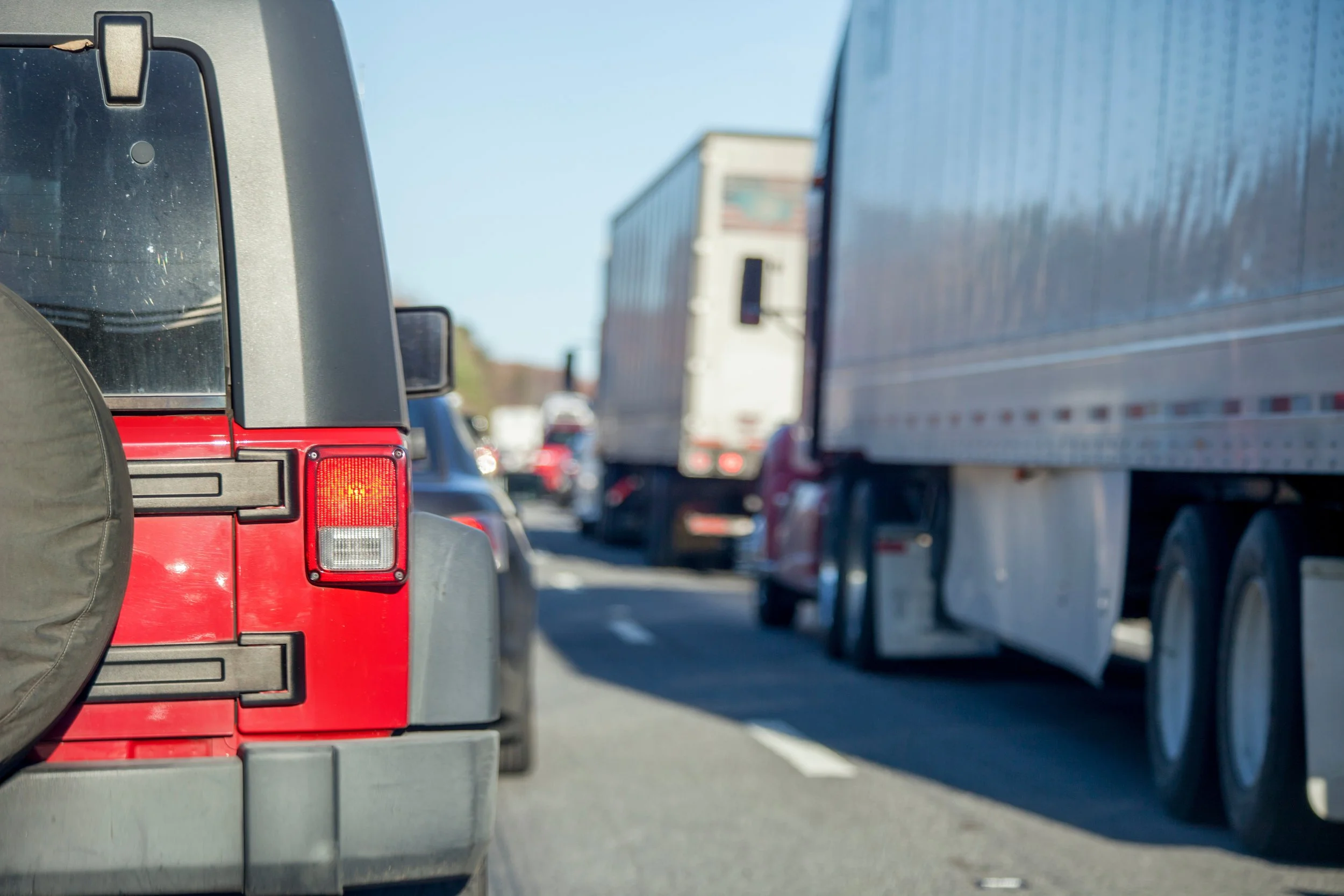
After a collision with a commercial truck, identifying who caused the crash may be more complicated than it first appears. The truck driver may have made a mistake, but the trucking company, maintenance provider, or another business may also have contributed to the accident.
Truck accident liability in NC depends on the collision circumstances, everyone's actions, and the evidence linking those actions to the injuries. North Carolina's contributory negligence rule adds another important consideration when determining whether an injured person can recover compensation.
Understanding who may be responsible can help you make informed decisions after a serious crash. This guide explains potential liability, federal trucking regulations, evidence, insurance coverage, and steps to help protect your rights.
Why Truck Accident Liability in NC Can Be Complicated
A typical passenger vehicle collision may involve two drivers and their insurance companies. Commercial truck accidents can involve several businesses with different responsibilities for the vehicle and its operation.
For example, one company may employ the driver, another may own the trailer, and a third may load the cargo. A separate contractor may handle inspections or repairs. However, involvement in the trucking operation does not automatically establish legal responsibility.
To establish negligence, an injured person generally must show that a party owed a duty of care, breached that duty, and caused legally compensable harm.
Federal and state transportation regulations may also help establish the safety standards that applied to a particular trucking operation.
Investigators must examine the evidence before determining which parties may be legally responsible.
Who Can Be Liable After a Commercial Truck Accident?
Several individuals or businesses may face liability when their negligent actions contribute to a collision.
The circumstances determine whether one party or several parties may bear responsibility.
The Truck Driver
Commercial truck drivers must operate their vehicles with reasonable care and comply with applicable traffic and safety regulations.
Driver negligence may involve:
- Following another vehicle too closely
- Changing lanes without checking surrounding traffic
- Driving too fast for road or weather conditions
- Using a phone or becoming distracted
- Driving while impaired or dangerously fatigued
- Failing to yield when required
For example, a driver who makes an unsafe lane change on Interstate 40 near Raleigh may collide with a vehicle traveling alongside the truck.
Investigators can review witness statements, available video, physical evidence, and other records to determine what happened.
The Trucking Company
A trucking company may face responsibility for an employee's negligence when the driver acts within the scope of employment. Lawyers commonly call this vicarious liability.
A company may also face direct liability for its own negligent conduct. Examples include failing to investigate relevant driver safety problems, inadequately supervising employees, or neglecting required vehicle maintenance.
A company may also create safety concerns when its dispatch practices pressure drivers to disregard applicable regulations.
However, investigators must establish the relevant facts before concluding that company practices contributed to a particular collision.
Truck Owners and Maintenance Providers
Commercial trucking businesses sometimes use vehicles they do not own. A carrier may lease a tractor or trailer, while another business handles equipment maintenance.
If faulty repairs or inadequate maintenance contribute to a collision, investigators may examine whether the responsible service provider acted negligently.
Ownership alone does not automatically establish fault. Vehicle maintenance records, inspection reports, repair invoices, and leasing documents may help clarify the relevant responsibilities.
Cargo Loading Companies
Improper cargo loading can create serious safety hazards. An overloaded truck may handle differently, while improperly secured freight may shift during a turn or sudden maneuver.
When cargo movement or improper weight distribution contributes to a crash, the business responsible for loading or securing the shipment may face liability.
Investigators may examine weight tickets, loading procedures, shipping documents, and available photographs.
Truck and Parts Manufacturers
Sometimes, an equipment defect contributes to a collision even when the driver operates the vehicle carefully.
Potential examples include defective steering components, tires, or braking systems. A product liability claim requires its own legal analysis. Investigators must examine the alleged defect, applicable legal standards, and whether the defect contributed to the injury.
An equipment failure does not automatically prove that the manufacturer was responsible.
How Federal Trucking Regulations Affect Liability
The Federal Motor Carrier Safety Administration (FMCSA) establishes safety requirements for covered commercial motor vehicle operations.
Depending on the vehicle and operation, these regulations address driver qualifications, driving hours, maintenance, inspections, and recordkeeping.
Violations may provide important evidence in a negligence investigation, although a violation does not automatically establish every element of liability.
Hours-of-Service Regulations
Fatigue can affect a driver's attention, judgment, and reaction time. Under the standard FMCSA hours-of-service regulations, property-carrying drivers generally:
- May drive up to 11 hours after 10 consecutive hours off duty.
- May not drive beyond the 14th consecutive hour after coming on duty.
- Must take a qualifying 30-minute break after eight cumulative hours of driving without a qualifying interruption.
- Must follow applicable weekly on-duty limits.
Certain exceptions and alternative provisions apply, including rules addressing adverse driving conditions and qualifying short-haul operations. Investigators must determine which requirements governed the driver before identifying a violation.
Driver Qualification and Maintenance Records
Federal regulations also establish recordkeeping and safety requirements for covered carriers.
A driver's qualification records may show licensing, driving history, and other relevant qualifications.
Maintenance records can help investigators determine whether a business inspected the truck, identified mechanical problems, or addressed necessary repairs.
When these records reveal possible safety failures, they may help explain how the collision occurred.
What Evidence Helps Establish Truck Accident Liability?
Strong evidence helps connect a potentially negligent action to the crash and resulting injuries.
Commercial truck investigations may involve records investigators don't typically need in an ordinary passenger-vehicle collision.
Electronic Logging Devices and Vehicle Data
Many covered commercial drivers use electronic logging devices (ELDs) to record information relevant to hours-of-service compliance.
Investigators may compare those records with dispatch communications and other evidence to examine the driver's work and driving history.
Some trucks also store engine or event-related information that may help investigators evaluate vehicle operation. The available information varies by vehicle and system. Not every truck records the same data.
Video, Witnesses, and Physical Evidence
Dashcam footage, nearby surveillance video, and witness accounts may help establish the sequence of events.
Investigators can also examine vehicle damage, tire marks, roadway conditions, and the crash location.
These details may help answer questions such as whether the driver failed to maintain a lane, whether the truck experienced a mechanical problem, or whether another vehicle contributed to the collision.
Company and Maintenance Records
Dispatch messages, inspection reports, repair documents, and relevant driver records may provide additional context.
For example, maintenance records could help establish whether a company knew about a safety-related problem before the accident.
An attorney may send a preservation request asking businesses to retain relevant evidence.
Because companies may routinely overwrite electronic information or dispose of certain records under applicable retention practices, early preservation efforts can matter.
Can More Than One Party Be Responsible for the Same Crash?
Yes. A truck collision may result from several negligent actions occurring at the same time.
Consider this hypothetical example.
A tractor-trailer travels along Interstate 40 near Raleigh. The driver begins a lane change without confirming that the adjacent lane is clear and collides with a passenger vehicle.
The investigation establishes that the driver failed to check the surrounding traffic.
Records also raise questions about whether the trucking company ignored relevant safety concerns while supervising the driver.
Investigators would need to examine each party's conduct and determine whether it contributed to the collision.
The driver's mistake alone would not automatically establish a separate negligence claim against every company connected to the truck.
This distinction matters because identifying additional businesses is not the same as proving their legal responsibility.
How Much Insurance Do Commercial Trucks Carry?
Many commercial trucking operations must maintain higher minimum financial responsibility limits than ordinary passenger vehicles.
Under FMCSA insurance requirements, covered for-hire carriers transporting nonhazardous property in vehicles with a gross vehicle weight rating of at least 10,001 pounds generally must maintain at least $750,000 in public liability coverage.
Certain hazardous-material operations require minimum limits of $1 million or $5 million, depending on the operation and materials transported.
These figures represent applicable minimum requirements, not guaranteed settlement amounts.
Actual insurance coverage depends on the carrier, vehicle, operation, policies, and applicable laws.
An investigation may identify multiple policies or other potential sources of recovery. However, no particular policy necessarily covers every claimed loss.
An attorney can examine available coverage alongside the evidence supporting liability and damages.
What Compensation May Be Available After a Truck Accident?
When another party's legally actionable conduct causes injuries, an injured person may pursue compensation for losses supported by the evidence.
Depending on the circumstances, recoverable damages may include:
- Past and reasonably anticipated future medical expenses
- Lost income during recovery
- Reduced future earning capacity
- Physical pain and suffering
- Permanent impairment or disfigurement
- Property damage
- Other legally recoverable losses
Medical records, employment documentation, repair estimates, and appropriate expert evaluations may help establish the extent of those losses.
The availability and amount of compensation depend on liability, causation, damages, and other applicable legal considerations.
What If a Truck Accident Causes a Death?
A fatal truck collision may support a wrongful death claim when the evidence establishes the necessary legal elements.
Under North Carolina law, the deceased person's personal representative generally brings the wrongful death action.
Recoverable damages may include qualifying medical expenses, reasonable funeral expenses, and other losses identified under North Carolina's wrongful death statute.
Because the legal requirements differ from an ordinary personal injury claim, families should obtain guidance about the applicable process.
How Does North Carolina's Contributory Negligence Rule Apply?
North Carolina generally follows a contributory negligence rule that can prevent an injured person from recovering damages when their own negligence proximately contributed to the injury.
For example, a trucking company might argue that another motorist made an unsafe maneuver or failed to yield.
However, an allegation does not establish contributory negligence.
The evidence must support the relevant legal requirements, including a causal connection between the injured person's conduct and the harm.
North Carolina also recognizes limited legal doctrines that may affect the analysis, including last clear chance and certain situations involving willful or wanton conduct.
These issues require careful examination of the circumstances.
For additional background, see Anglin Law Firm's North Carolina personal injury FAQ.
What Should You Do After a Truck Accident in North Carolina?
Your health and safety should come first.
If you're in a commercial truck collision, these steps may help protect your well-being and preserve relevant information.
Seek Medical Care and Report the Accident
Call emergency services when you need immediate assistance. Obtain appropriate medical attention, even when an injury initially seems minor. Report the collision to law enforcement when North Carolina law requires it. An official crash report may provide useful information, although it does not necessarily resolve every liability question.
Document Available Evidence
If you can do so safely, photograph the vehicles, visible damage, roadway, and relevant surroundings. Record the trucking company's name, vehicle markings, and USDOT identification number when available. Collect witness contact information and retain your medical and accident-related documents. Avoid putting yourself in danger to gather evidence.
Be Careful With Insurance Communications
An insurance company may request information about the crash or your injuries. Provide required and accurate information, but avoid guessing about fault or the extent of your medical condition. Before giving an optional recorded statement to another party's insurer or accepting a settlement, consider obtaining legal guidance.
Preserve Important Records
Keep medical bills, treatment records, repair estimates, photographs, and correspondence related to the accident. Avoid discarding potentially important physical evidence before obtaining appropriate guidance. For additional accident-related steps, review Anglin Law Firm's guide on what to do after a car accident in Raleigh.
How Long Do You Have to File a Truck Accident Lawsuit?
North Carolina generally provides three years to file a negligence-based personal injury lawsuit, subject to applicable accrual rules and exceptions.
Wrongful death actions generally have a two-year limitation period measured from the date of death.
Different circumstances or defendants may create additional legal requirements or shorter deadlines.
These periods apply to filing lawsuits, not necessarily to completing an insurance claim.
Because evidence and legal deadlines can affect a case, obtaining timely advice may help injured people understand their options.
Talk With a Raleigh Truck Accident Attorney
Determining truck accident liability in NC may require examining driver conduct, company records, maintenance history, insurance coverage, and applicable safety regulations.
Anglin Law Firm helps people facing serious injuries understand their legal options and navigate the personal injury process.
Chris Anglin brings more than 15 years of experience and focuses exclusively on personal injury law.
If you or someone you love was injured in a commercial truck collision, you can speak with a Truck Accident Lawyer in Raleigh at Anglin Law Firm about your situation. The firm handles personal injury cases throughout Raleigh and other North Carolina communities.
Anglin Law Firm offers free, no-obligation consultations and works on a contingency-fee basis. You pay no upfront attorney fees, and the firm explains its fee agreement and case expenses before representation begins.
Contact Anglin Law Firm or call 919-803-1516 to discuss your options.
Frequently Asked Questions
1. Who is usually liable for a truck accident in North Carolina?
Liability depends on the circumstances. A truck driver, trucking company, maintenance contractor, cargo loader, or manufacturer may be responsible when the evidence meets the applicable legal requirements.
2. Can I sue a trucking company if its driver caused the accident?
Possibly. A trucking company may face vicarious liability for an employee's negligence within the scope of employment. It may also face direct liability for negligent business practices that contributed to the collision.
3. What if I was partly responsible for the truck accident?
North Carolina's contributory negligence rule may bar recovery when your negligence proximately contributed to the injury. However, fault allegations require supporting evidence, and limited legal doctrines may affect the outcome.
4. How much insurance must a commercial truck carry?
Certain covered for-hire carriers must maintain at least $750,000 in public liability coverage. Some hazardous-material operations require $1 million or $5 million. Requirements vary by carrier and operation.
5. How long do I have to file a truck accident lawsuit in North Carolina?
The general deadline for a negligence-based personal injury lawsuit is three years, while wrongful death actions generally have a two-year deadline. Exceptions and other requirements may apply, so obtaining advice early can help protect your legal options.